
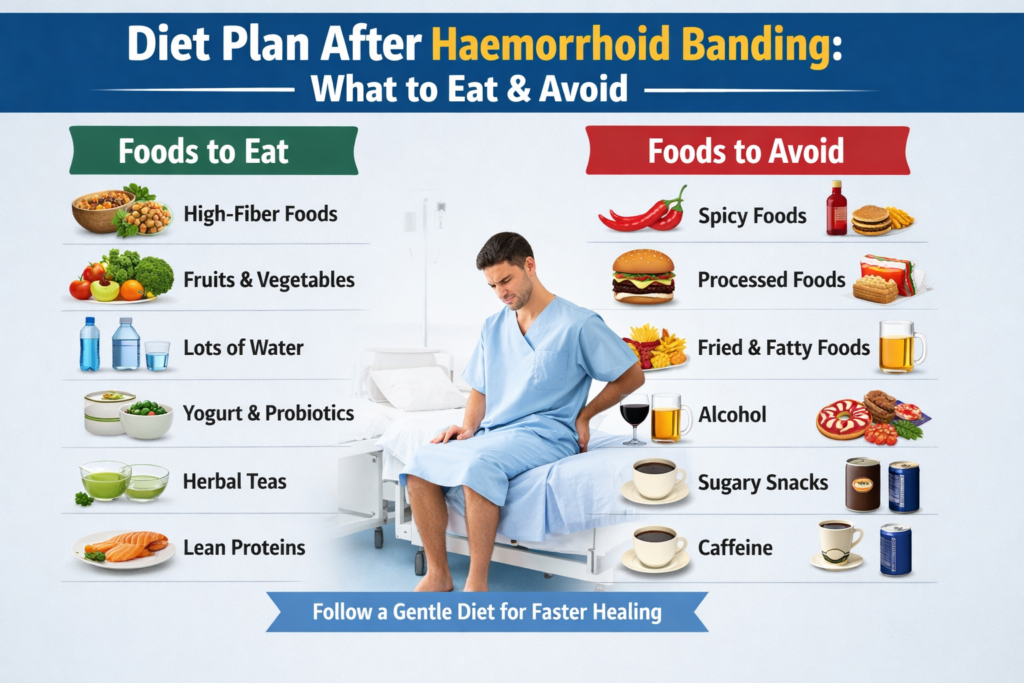
Recovery after haemorrhoid banding is not just about the procedure; it also depends on how well you support your body during the healing phase. One of the most important aspects of recovery is following the right diet. A proper diet plan after haemorrhoid banding helps reduce discomfort, improves digestion, and ensures that bowel movements remain smooth and pain-free.
Many people ignore dietary care after the procedure, but even small food choices can impact recovery. Eating the right foods can prevent strain, while poor dietary habits may slow healing. Understanding this balance is key to a comfortable recovery journey.
Why Diet Plays a Crucial Role After Haemorrhoid Banding
After haemorrhoid banding, the treated tissue begins to shrink and eventually falls off. During this sensitive period, the body requires gentle care, especially while passing stools. A proper diet plan after haemorrhoid banding ensures that bowel movements do not put pressure on the healing area.
When your diet lacks fiber and fluids, stools become hard and difficult to pass. This can lead to discomfort and irritation. On the other hand, a balanced diet supports soft stools and regular bowel habits, making recovery smoother and less stressful.
Following the right dietary approach helps in multiple ways:
- It keeps stools soft and easy to pass, reducing the need for straining and protecting the healing tissues from unnecessary pressure
- It supports a healthy digestive system, allowing your body to maintain regular bowel movements without sudden discomfort
- It minimizes irritation in the anal region, which is especially important during the initial recovery days
- It contributes to faster healing by reducing complications that may arise due to constipation or improper digestion
What to Eat After Haemorrhoid Banding
A healthy diet plan after haemorrhoid banding should focus on simple, natural, and easily digestible foods. Instead of making drastic changes, it is better to gradually include balanced meals that support digestion and overall comfort.
Fiber-Rich Foods for Smooth Bowel Movements
Fiber plays a central role in recovery. It adds bulk to the stool and makes it easier to pass without causing strain. Including whole grains such as oats, brown rice, and whole wheat can significantly improve bowel regularity. Vegetables like spinach, carrots, beetroot, and pumpkin are also excellent choices as they are rich in nutrients and easy to digest.
Fruits are equally important. Papaya, apples with skin, bananas, and citrus fruits help regulate digestion naturally. When these foods become a regular part of your diet plan after haemorrhoid banding, they help maintain a consistent and comfortable bowel routine.
Light and Easily Digestible Foods for Better Comfort
Right after the procedure, it is important to avoid heavy meals and instead focus on foods that are gentle on the stomach. Light meals reduce pressure on the digestive system and make the recovery process smoother.
Foods that can be included are:
- Soft and freshly prepared meals like vegetable soups and khichdi that are easy to digest and do not burden the stomach
- Traditional options like idli and upma which provide energy without causing heaviness or discomfort
- Steamed or lightly cooked vegetables that retain nutrients while remaining gentle on digestion
- Simple home-cooked meals that avoid excessive oil and spices, helping maintain digestive balance
These food choices support the overall goal of a diet plan after haemorrhoid banding by ensuring comfort and preventing unnecessary digestive stress.
Hydration and Its Importance in Recovery
Hydration is often overlooked but is one of the most important parts of recovery. Water helps soften stools and supports smooth bowel movements. Without proper hydration, even a fiber-rich diet may not be effective.
Drinking enough fluids throughout the day helps your body function properly and supports healing. Including natural fluids like coconut water, fresh juices, and buttermilk can further improve hydration levels. Maintaining proper fluid intake ensures that your diet plan after haemorrhoid banding works efficiently.
Probiotic Foods for Digestive Balance
Probiotic foods help maintain a healthy gut by supporting good bacteria in the digestive system. Including curd and buttermilk in your daily routine can improve digestion and reduce the chances of irregular bowel movements.
These foods are especially useful in maintaining a stable digestive environment, which is essential during recovery. A balanced gut contributes to smoother bowel movements and complements your diet plan after haemorrhoid banding.
What to Avoid After Haemorrhoid Banding
Avoiding certain foods is just as important as choosing the right ones. Some foods can slow digestion, cause irritation, or lead to constipation, all of which can interfere with healing.
Spicy and Oily Foods That Cause Irritation
Foods that are high in spice or oil can irritate the digestive system and increase discomfort. Deep-fried snacks, heavily spiced curries, and fast food should be avoided during recovery as they may worsen sensitivity and delay healing.
Low-Fiber and Processed Foods
Processed foods lack essential nutrients and fiber. Items such as white bread, packaged snacks, and ready-to-eat foods can slow digestion and lead to hard stools.
Avoiding these foods is important because they go against the purpose of maintaining a healthy diet plan after haemorrhoid banding, which focuses on smooth and regular bowel movements.
Drinks That May Affect Hydration
Certain beverages can negatively impact hydration levels and digestion:
- Excess consumption of coffee and tea can lead to dehydration, making stools harder and more difficult to pass
- Carbonated drinks may cause bloating and discomfort, which can disturb the digestive process
- Sugary beverages can slow digestion and do not provide the hydration your body actually needs
Replacing these with healthier fluid options supports better recovery.
Heavy and Hard-to-Digest Foods
Heavy meals can put extra pressure on your digestive system. Foods like red meat and rich gravies take longer to digest and may lead to discomfort during bowel movements.
Keeping meals light and simple allows your body to focus on healing and supports a smoother recovery process.
Simple Daily Habits to Support Recovery
Along with following a proper diet plan after haemorrhoid banding, maintaining simple daily habits can improve your recovery experience. Starting your day with warm water can help stimulate digestion. Eating at regular intervals prevents sudden digestive issues and keeps your system balanced.
Light physical activity such as walking can also support digestion. Avoid delaying bowel movements, as this can lead to harder stools and discomfort. Small lifestyle adjustments, when combined with the right diet, can make a significant difference.
Conclusion
Following a well-balanced diet plan after haemorrhoid banding is essential for a smooth and comfortable recovery. By choosing fiber-rich foods, staying hydrated, and avoiding items that cause irritation, you can support your body’s natural healing process.
Consistency in your eating habits and lifestyle plays a key role in preventing complications and ensuring long-term relief. A mindful approach to diet not only helps in recovery but also promotes better digestive health overall.
Comments: